The complete, detailed, thoughtfully explained guide — created for modern diamond buyers by SAJ Jewels.
Today, one of the most common online searches includes “lab grown diamonds vs natural diamonds, difference between lab and real diamonds, and lab created diamonds vs mined diamonds”. Buyers want clarity before making an investment, especially when it comes to understanding what makes lab-grown diamonds real, how they compare to natural ones, and whether they offer better value, sustainability, and ethical transparency.
At SAJ Jewels, we observe daily that the modern consumer wants more than brilliance — they are drawn to sustainable jewellery, ethical diamonds, and eco-friendly jewellery that reflect conscious choices without compromising luxury or beauty.
Understanding Lab-Grown Diamonds
Lab-grown diamonds, also known as lab-created diamonds, are often misunderstood because people assume they are “fake.” In reality, they are real diamonds with the same physical, optical, and chemical composition as natural diamonds. The only difference lies is in their origin. Natural diamonds are created deep beneath the earth over millions of years, whereas lab-grown diamonds are produced in advanced laboratories using innovative technology that replicates the same natural processes.
What makes lab-grown diamonds appealing to today’s buyer is the transparency in their creation. There is complete clarity about where they come from, how they are grown, and the conditions under which they are formed. This gives customers confidence, especially those seeking ethical diamonds and conflict free diamonds. Every diamond in the SAJ Jewels lab grown diamond collection is certified, precisely cut, and hand-selected, ensuring the highest level of quality.
How Lab-Grown Diamonds Are Made: The Science Behind the Sparkle
To understand the authenticity of lab-grown diamonds, it helps to know how they are produced. Manufacturers use two advanced methods — CVD (Chemical Vapor Deposition) and HPHT (High Pressure High Temperature).
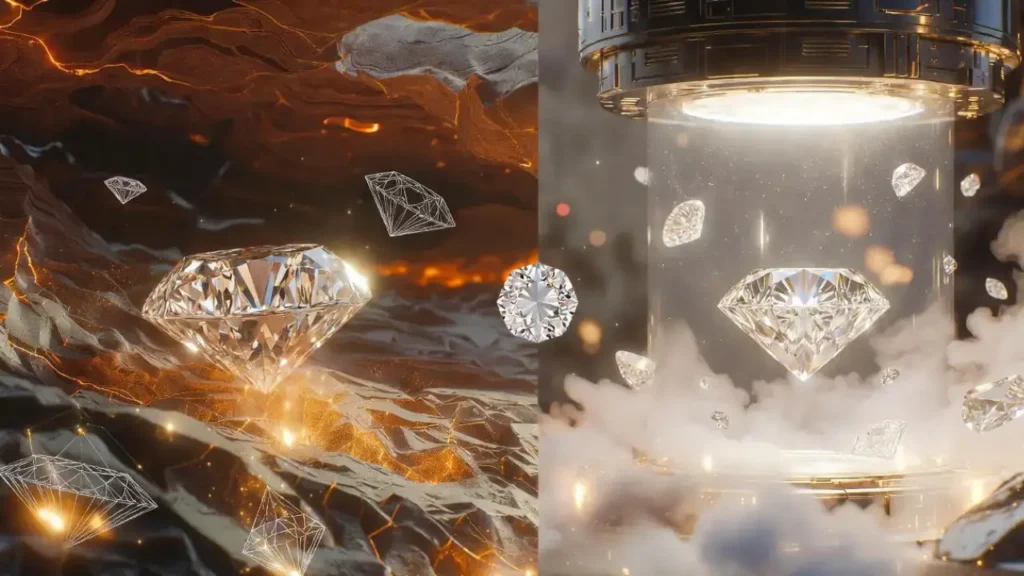
In the CVD process, a tiny diamond seed is placed inside a sealed chamber filled with carbon-rich gases. When the gases are heated to high temperatures, carbon atoms begin settling on the seed, forming crystal layers that slowly build into a diamond. This method allows precise control over clarity, color, and growth speed, creating diamonds with exceptional brilliance.
The HPHT method mimics the natural formation of diamonds beneath the earth. Carbon is subjected to extremely high pressure and temperature until it crystallizes into a diamond. This method replicates geological conditions and produces diamonds identical to those mined from the earth.
No matter which method is used, the result is the same: a real diamond, identical to natural diamonds and certified by gemological institutes like GIA and IGI.
What Makes Natural Diamonds Unique
Natural diamonds have their own charm, rooted in geological history. These stones form very deep beneath the earth’s crust under intense pressure and heat. Each natural diamond takes millions — sometimes billions — of years to develop. Because of this extraordinary timeline, they are celebrated as marvels of nature and often chosen for their rarity and emotional value.
However, mining natural diamonds comes with environmental and ethical considerations. Large-scale mining can disturb ecosystems, consume significant energy resources, and affect landscapes. While many diamonds are ethically sourced today, not all regions guarantee complete traceability. For this reason, many customers move towards eco-friendly jewellery and ethical diamonds that offer transparency from start to finish — a space where lab-grown diamonds excel.
Lab-Grown Diamonds vs Natural Diamonds: Detailed Comparison
A thorough lab-grown diamond and natural diamond comparison reveals that the differences are less about physical qualities and more about values, origin, cost, and environmental footprint.
|
Category |
Lab-Grown Diamonds |
Natural Diamonds |
|
Appearance & Brilliance |
Identical to natural diamonds with the same sparkle, fire, and brilliance. Even gemologists need special instruments to tell the difference. |
Visually identical to lab-grown diamonds; same optical properties and brilliance. |
|
Durability & Lifespan |
Made of crystallized carbon with a hardness of 10 on the Mohs scale. Extremely durable and long-lasting — perfect for daily wear and heirloom pieces. |
Also made of crystallized carbon with the same hardness and durability. Formed naturally deep within the earth. |
|
Ethics & Traceability |
Always conflict-free diamonds with complete transparency about origin and production. Ideal for ethically conscious buyers. |
Often ethically sourced, but traceability varies by mining region. Ethical assurances depend on supply chain practices. |
|
Environmental Impact |
Considered the more eco-friendly jewellery option. Requires no mining, less land disturbance, and a significantly lower environmental footprint. |
Mining affects land, ecosystems, and energy use. Comes with environmental responsibilities due to extraction methods. |
|
Cost Differences |
Typically 30–40% more affordable, allowing buyers to choose larger or higher-quality stones within the same budget. |
Higher in cost due to rarity, mining expenses, and historical demand. Preferred by buyers seeking natural rarity. |
|
Resale Value |
Resale market is growing but still developing. Value varies based on certification, quality, and market trends. |
Traditionally stronger resale value due to long-established demand and natural rarity. |
|
Overall Choice |
Ideal for sustainable, ethical, modern luxury and cost-effective custom jewellery. |
Preferred for geological rarity, traditional sentiment, and long-term value perception. |
Why the Cut of the Diamond Matters More Than Its Origin
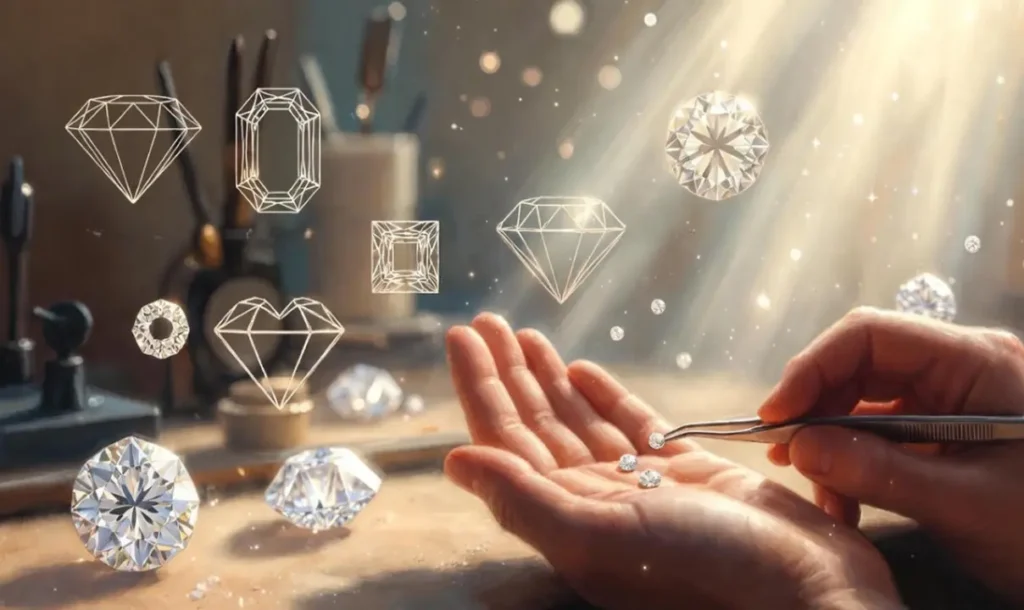
Regardless of whether a diamond is lab-grown or natural, the cut significantly influences its sparkle. A poorly cut diamond — even if flawless in clarity — may appear dull, while a well-cut diamond catches light beautifully. Cut quality depends on symmetry, proportions, polish, and facet precision. At SAJ Jewels, our expert craftsmen ensure that every stone, whether lab-grown or natural, is cut to maximize brilliance and elevate the overall appearance of the jewellery.
Debunking Myths About Lab-Grown Diamonds
There are several misconceptions surrounding lab-grown diamonds, often due to outdated information. Many people assume lab-grown diamonds are fake, fragile, or visually different. In reality:
- They are not imitation stones — cubic zirconia or moissanite are imitations, not lab-grown diamonds.
- Lab-grown diamonds are just as durable as mined ones because they share the same atomic composition.
- They are visually identical to natural diamonds, and even professionals cannot tell them apart without testing equipment.
- Thanks to controlled growth environments, many lab-grown diamonds exhibit remarkable clarity and color compared to some natural diamonds.
These facts have encouraged more customers to explore lab-grown options with confidence and excitement.
Why Modern Buyers Are Choosing Lab-Grown Diamonds?
The growing preference for lab-grown diamonds reflects a shift in values. Today’s buyers prioritize transparency, sustainability, and ethical sourcing. They want luxury that doesn’t conflict with their principles.
Lab-grown diamonds allow consumers to choose larger stones, unique shapes, and high-quality pieces at accessible price points. They also allow greater flexibility for custom diamond jewellery, making personalized designs more feasible and budget-friendly. This modern approach appeals to young couples, professionals, and eco-conscious buyers who appreciate elegance with purpose.
How to Decide Between Lab-Grown and Natural Diamonds
When comparing lab grown diamonds vs natural diamonds, your decision should reflect your personal priorities. If you appreciate geological rarity and traditional investment value, natural diamonds might resonate with you. If you want ethical diamonds, sustainable jewellery, affordability, and modern luxury, lab-grown diamonds offer exceptional benefits.
Consider your purpose, budget, values, and desire for customization. At SAJ Jewels, we help customers explore both options in detail so they can choose a diamond that aligns with their lifestyle and emotional connection.
The SAJ Jewels Lab-Grown Diamond Jewellery Collection
Our curated lab-grown diamond jewellery collection is crafted for buyers who value sustainability, beauty, and craftsmanship. Each piece reflects our commitment to ethical sourcing and exceptional artistry. Whether you prefer minimal designs, bold statement pieces, or fully customized creations, our collection offers elegance with transparency.
Every diamond from SAJ Jewels is IGI or GIA certified, hand-picked by specialists, and set in meticulously crafted designs. From solitaires and engagement rings to bridal sets and bespoke creations, we combine luxury with responsible sourcing.
Your perfect diamond piece awaits
Create Your Own Diamond Story with Custom Designs
At SAJ, Lab-grown diamonds offer endless creative possibilities for custom jewellery. Customers can choose larger center stones, experiment with unique cuts, combine colored diamonds, or create vintage-inspired or modern designs without the limitations imposed by cost. SAJ Jewels works closely with clients to turn their ideas into refined, meaningful jewellery that lasts a lifetime.
Create Your Custom SAJ Jewels Diamond Piece
Final Thoughts: Choosing a Diamond That Matches Your Values
Both lab-grown and natural diamonds are exquisite in their own way. When exploring lab grown diamonds vs natural diamonds, the right choice depends on what matters most to you — whether it is sustainability, ethics, affordability, rarity, or emotional significance. At SAJ Jewels, our mission is to help you discover a diamond that reflects your personal story, your values, and your style, offering guidance every step of the way.